
10 March 2026
The Winter of the Kolbars
By Morteza Bahmani
Hamid was a kolbar, a thin young man of twenty-four or twenty-five. At dawn that morning he was waiting to cross the snow-covered Hawraman mountains. Only a few hours earlier, standing before me, he had thanked God that there was a border and that he could make a living carrying goods across it.
“In winter life is harder,” he said. “In all the nearby towns there are no factories. There’s no work in the orchards, not even day labour. People have no income except being a kolbar. And if this didn’t exist —then there would be nothing left. People would die of hunger.”
I asked him, “When will the kolbars arrive?” he said they would start coming in a few hours. If I wanted, he said, I could follow the tracks in the snow and meet them along the way.
“Is it safe?” I asked. He laughed. “Don’t worry. Live one day like us—like a Kurd!”
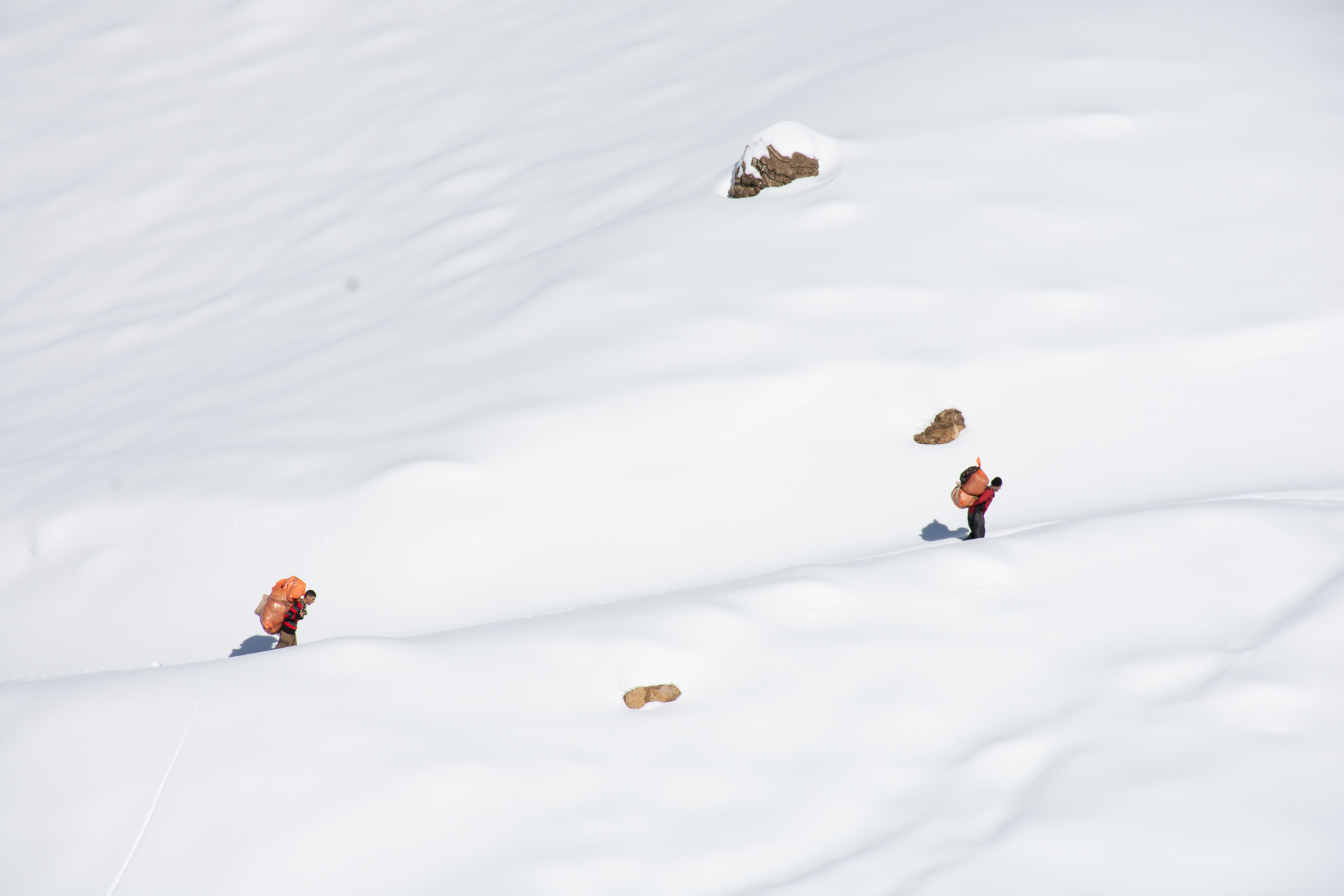
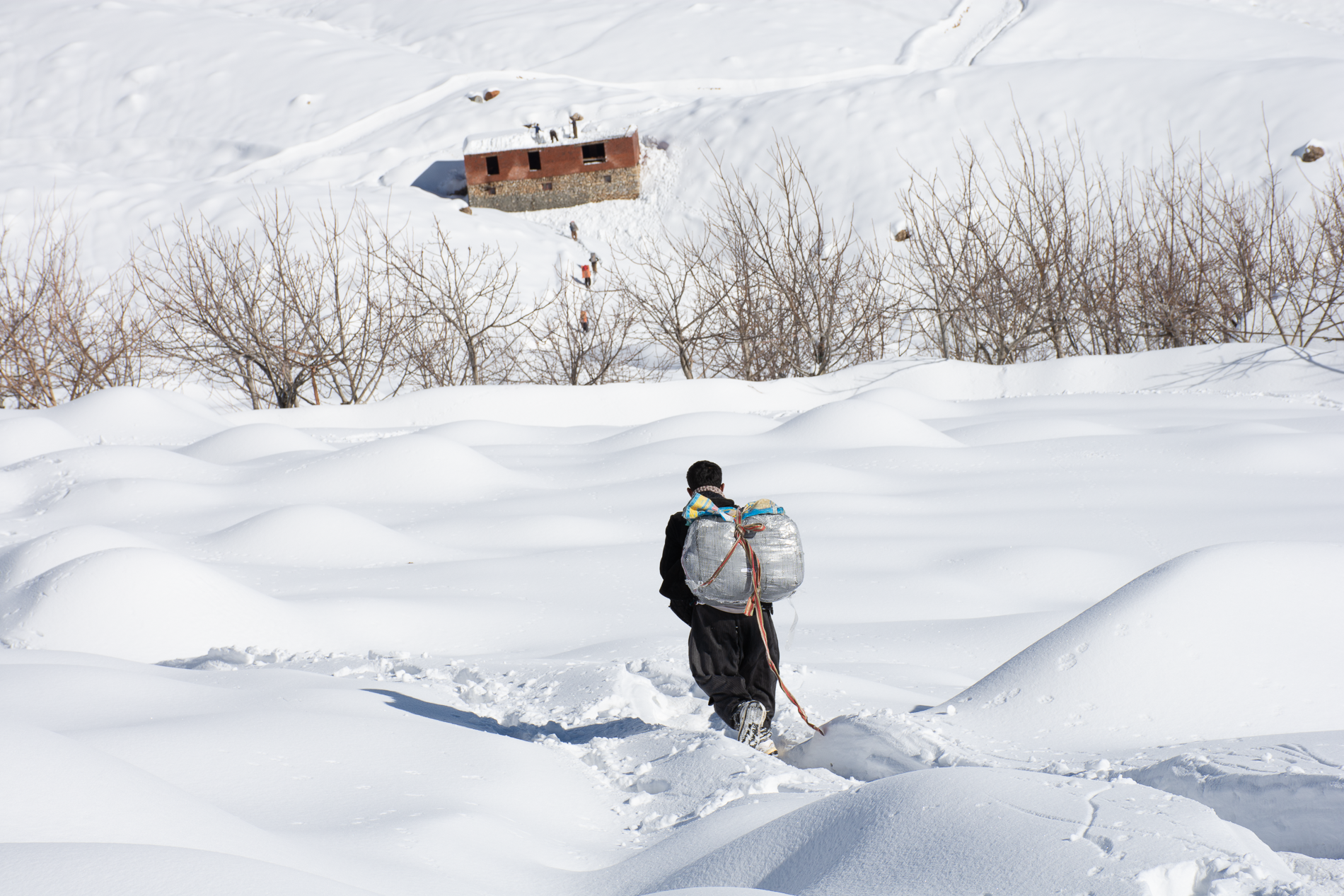
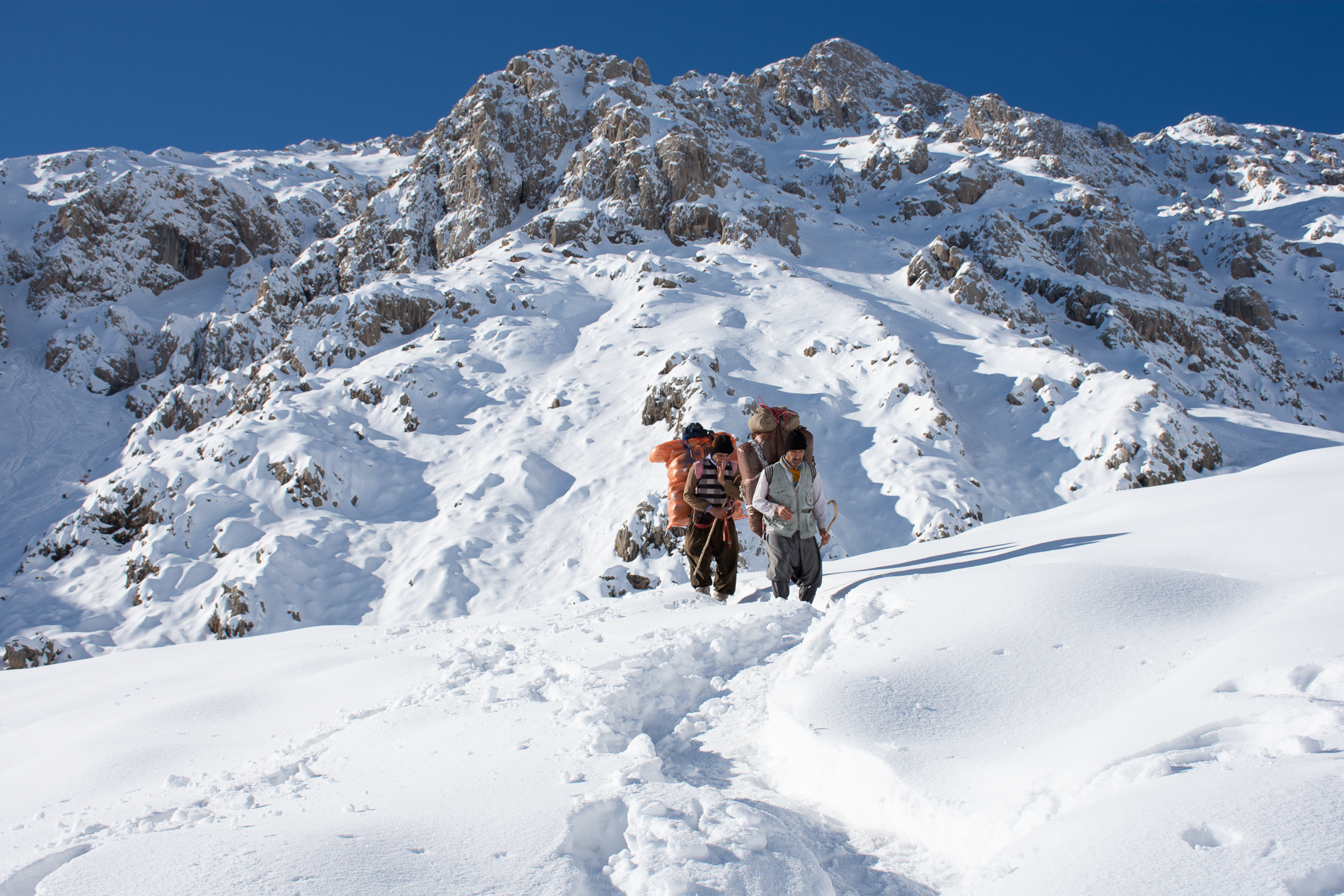
I didn’t want to back out, so I set off and followed the tracks. About an hour later, as I walked farther ahead, I began to hear cheerful Hawrami songs in the distance. I looked around, again and again, trying to locate the source of the songs. My eyes searched the endless white of the snow for any sign of life. The mountains lay buried under a blanket of white, and every few hundred metres a jagged rock would push through the snow like the blade of a dagger. That was all there was to see.
Hours passed. I walked between two mountains, stopping now and then to catch my breath and look around. Sometimes I heard the singing again. It gave me hope they would appear soon.
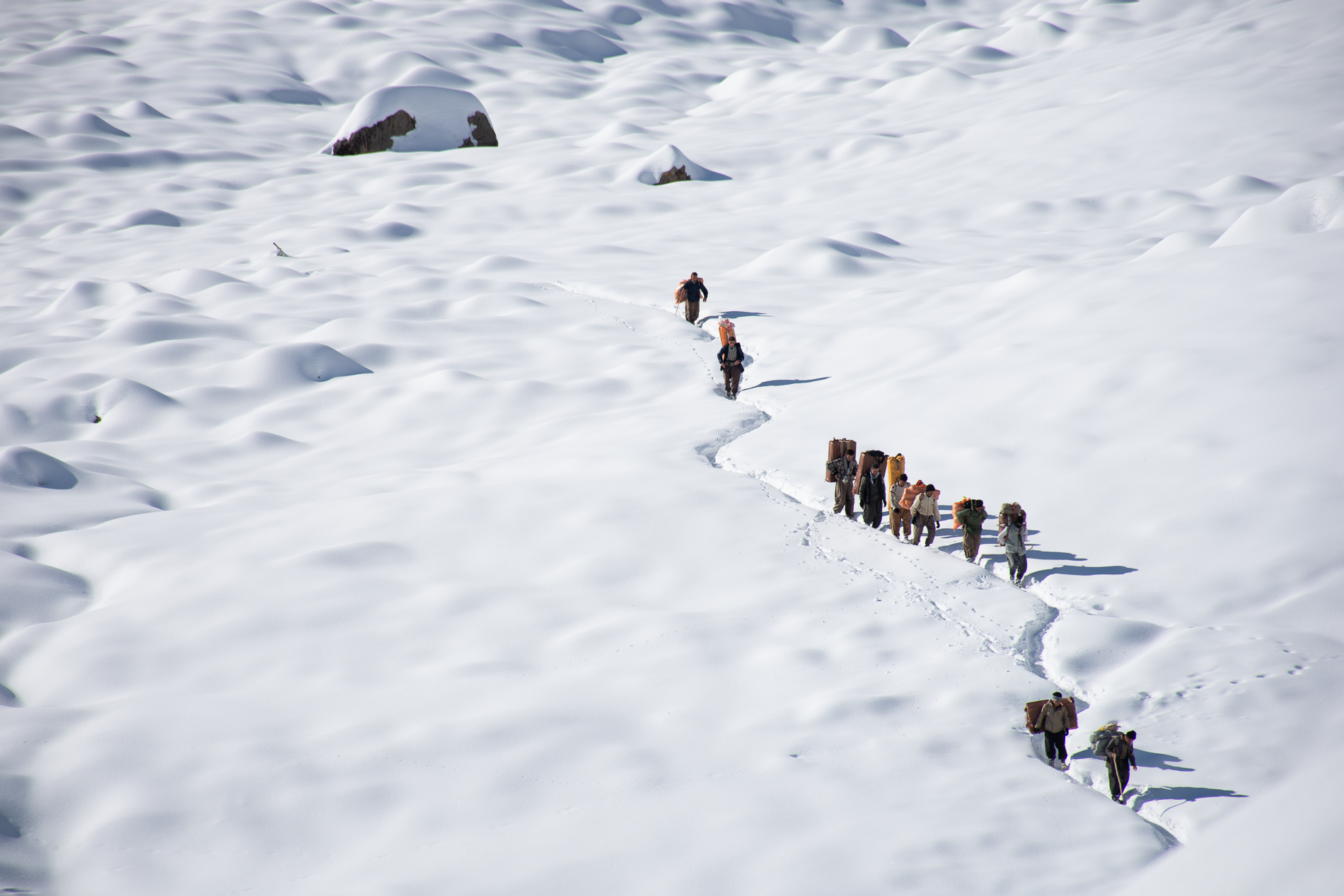
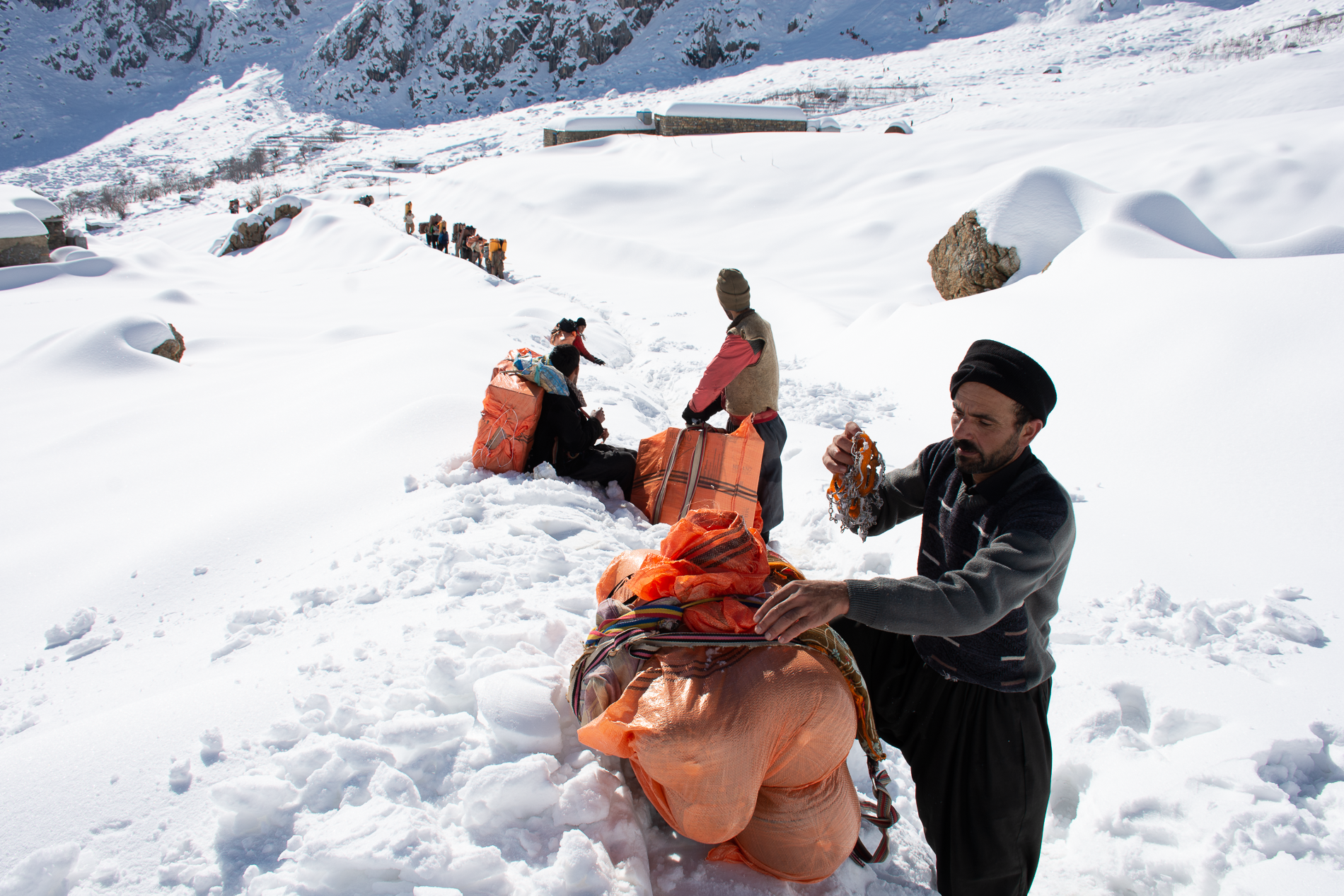
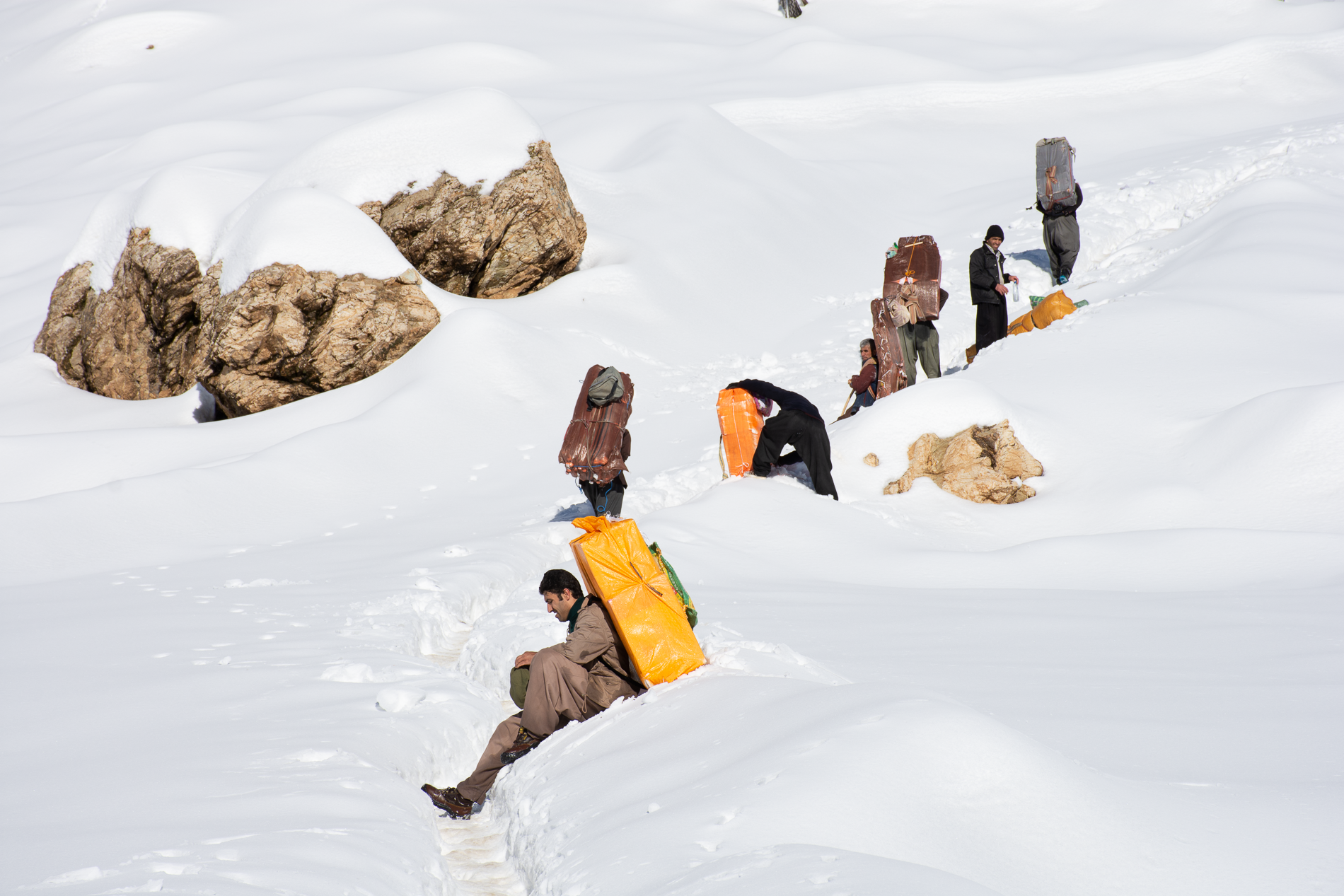
After a while, against the stark black and white of snow and mountains, I saw tiny dots moving quickly down the slope. They slid and skidded toward the valley. I turned on my camera and zoomed in. It was them—the kolbars—sitting on large yellow and orange sacks, sliding down the mountain as if on sleds.
I ran through the snow toward them. I kept asking myself: What kind of people are these kolbars? How do they endure such a life? What strength do they have to carry on like this?
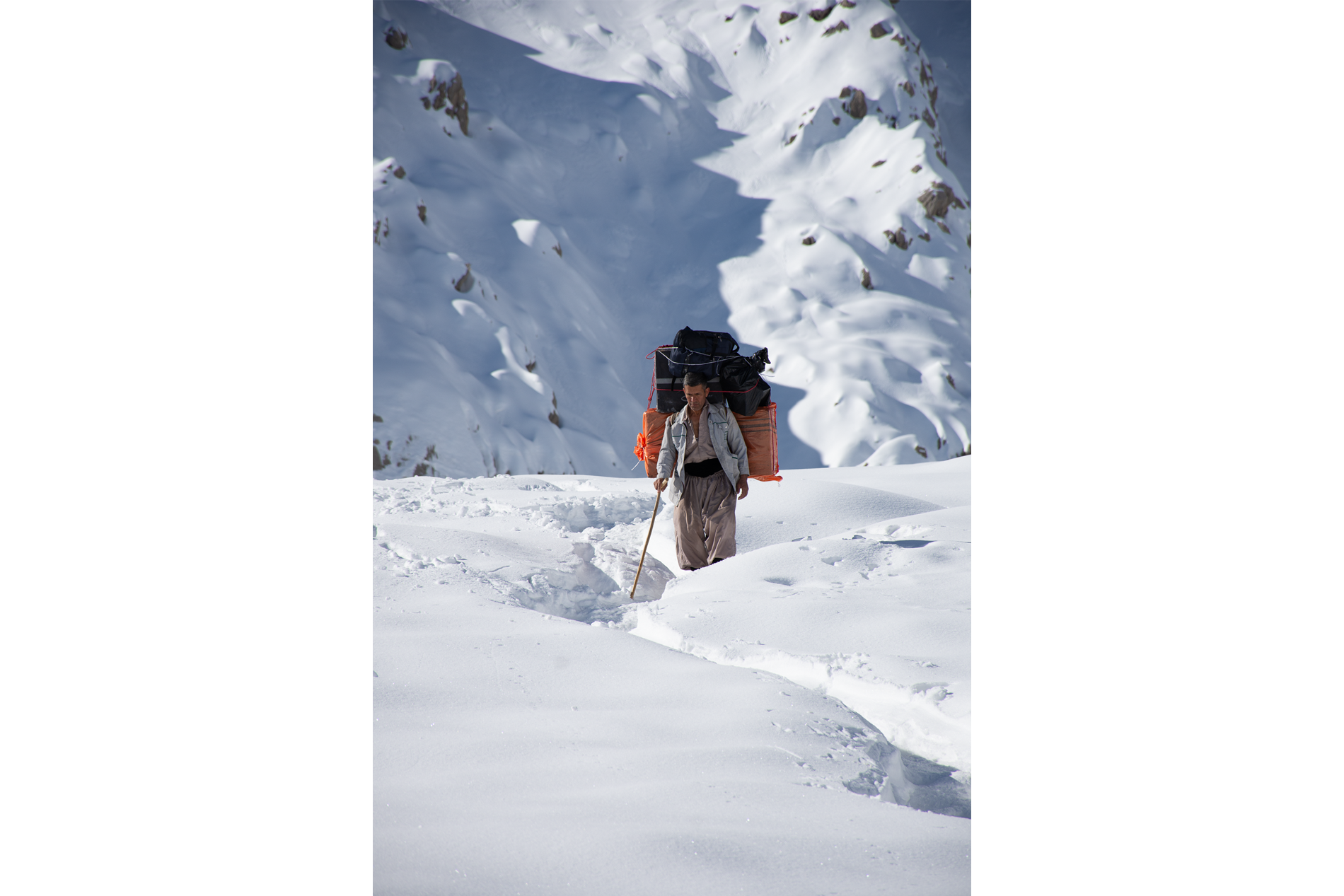
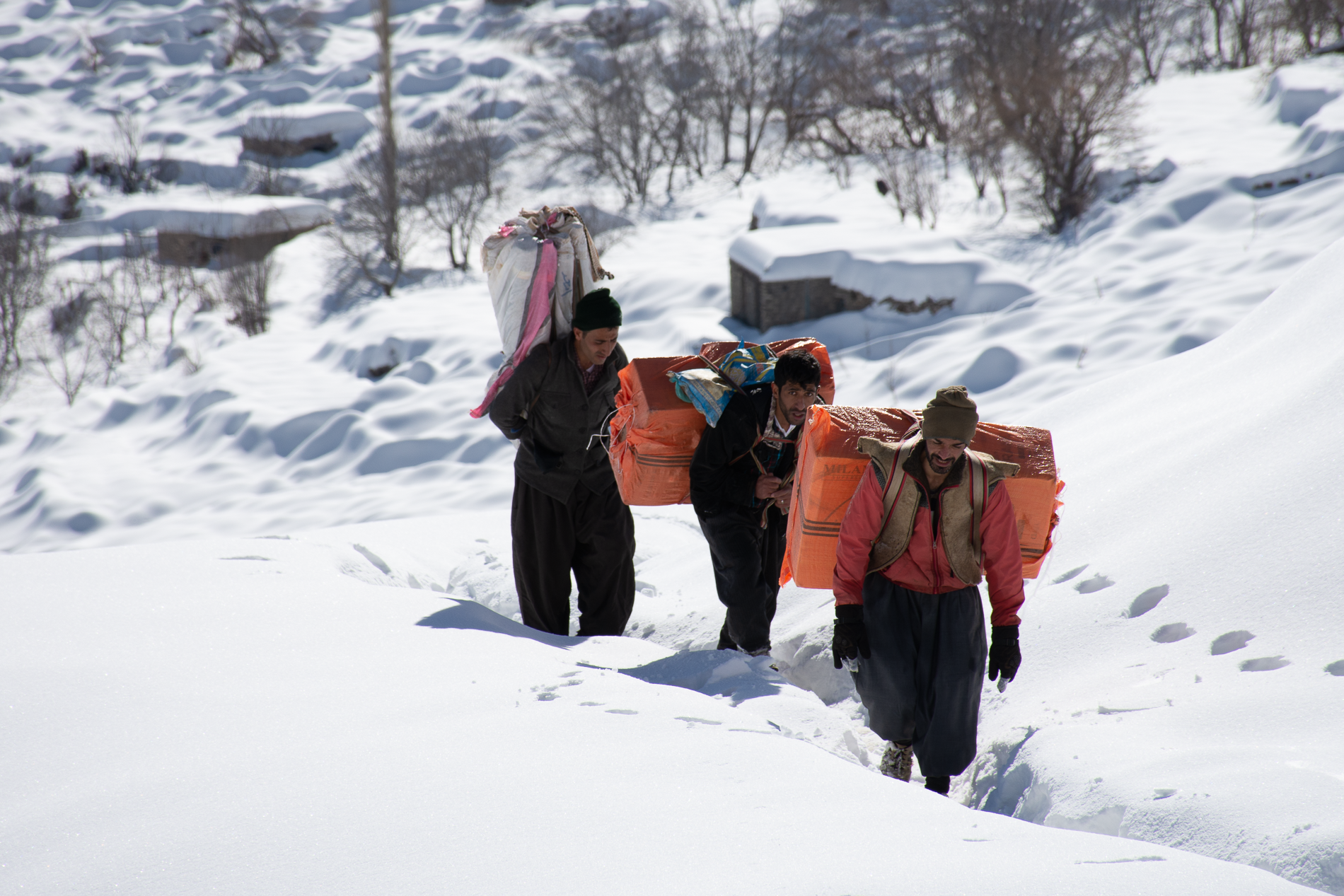
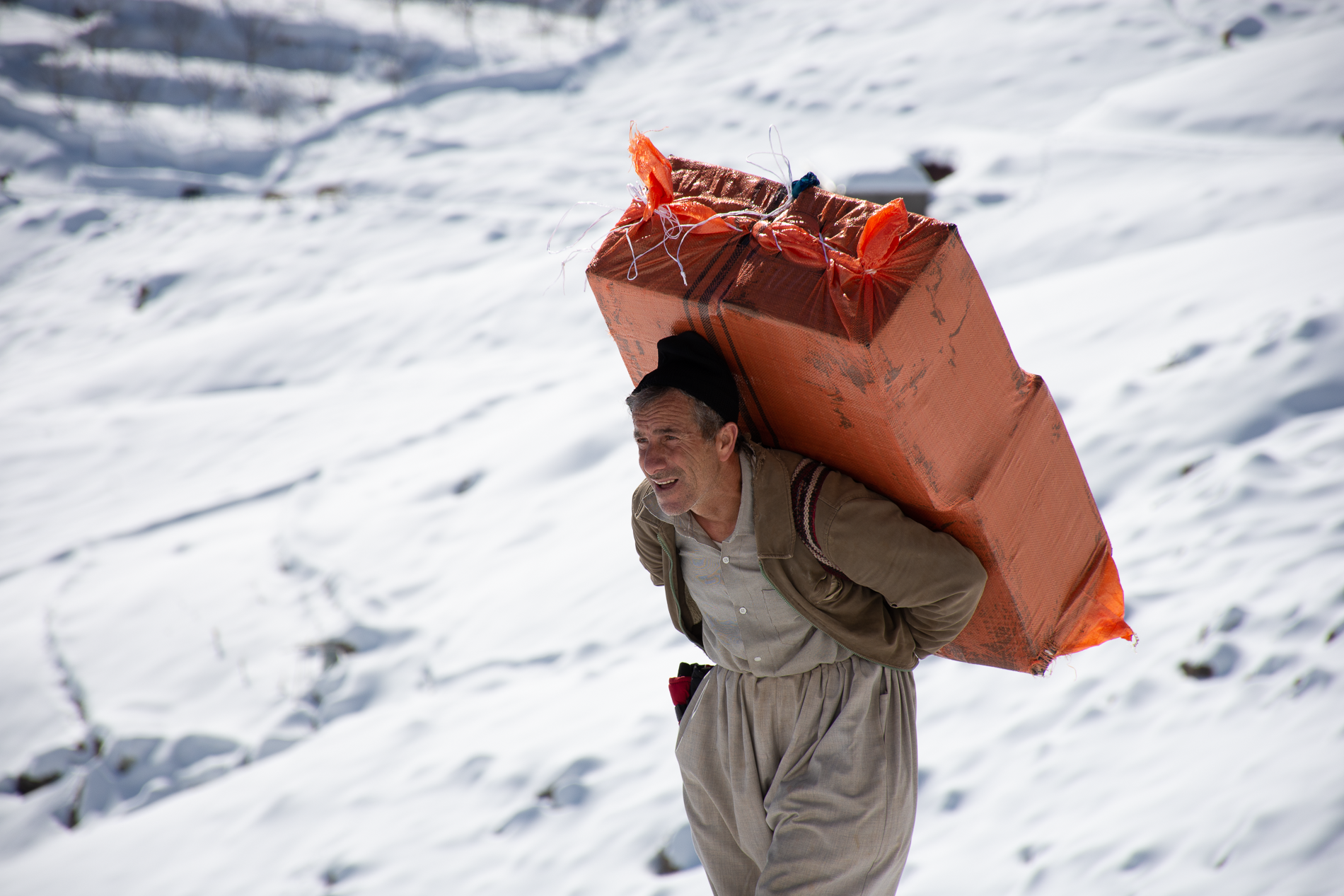
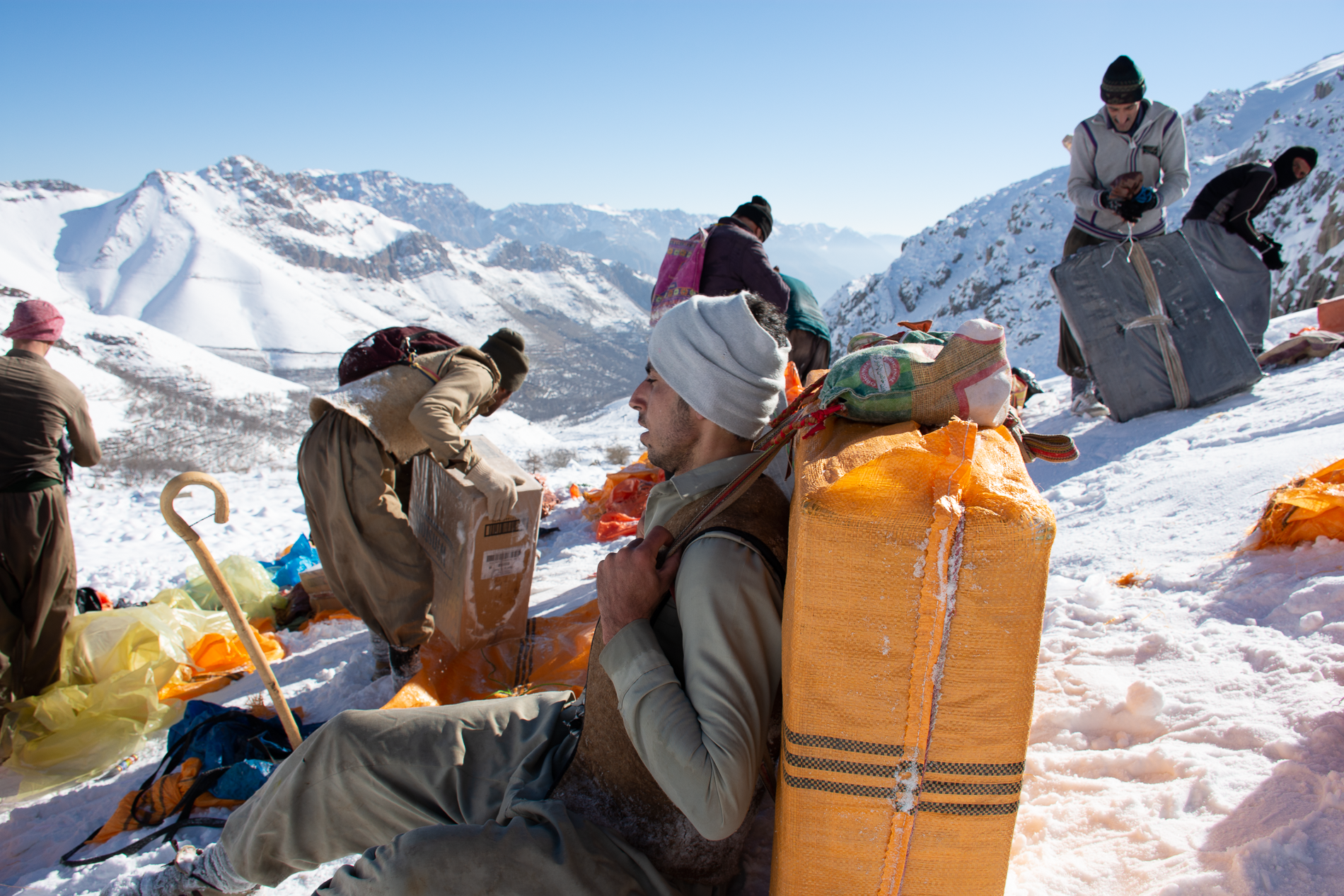
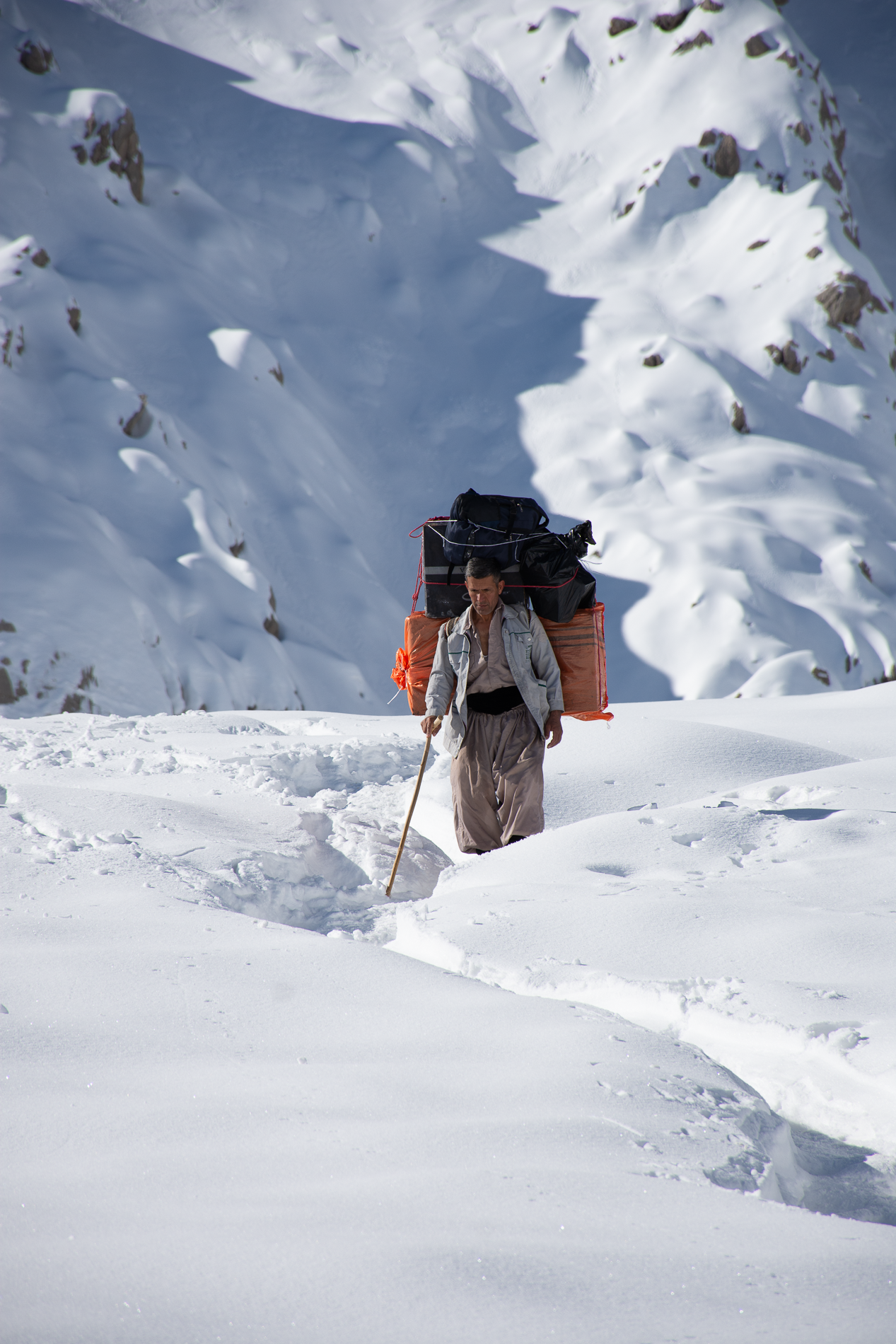
But they were just ordinary people. Not strange at all. They were villagers, like any other villagers I had seen before—young men and old men wearing thin, cheap clothes. They passed silently in front of my camera, carrying boxes and sacks. I tried to draw them into conversation, offering greetings, wishing them strength, telling them ell done. Most answered with just a smile and a brief hello.
They kept moving, and I kept photographing. Through the camera’s viewfinder I watched their faces, their hands, their sacks and loads, their smiles. I saw their frowns too, their fear, their hesitation as they looked at me—the stranger with a camera.
I stood there amid the stream of kolbars pouring down the mountain all at once, taking pictures. A young man with a small frame passed in front of me. A large box of cigarettes was strapped to his back. He could easily have been me, or one of my friends.
Snow had settled on his shoulder. I quickly took a few photos of him, of the snow on his shoulder, then stepped forward to brush it away. He smiled, glanced at the snow, and said: “This is our share of human rights.”
Then he walked on.
Strange people, these kolbars—people very much like you and me